-
Sanctions Imposable for Violations of the Federal Rules of Civil Procedure
Kenneth F. Ripple, Carol Mooney, and Robert E. Rodes Jr.
This 1981 Federal Judicial Center paper surveys the current state of the law with respect to sanctions for violations of the Federal Rules of Civil Procedure as reported in both the case law and the secondary literature. The focus is on litigation behavior that results in the imposition of sanctions and the factors considered important by federal courts in determining which sanctions to apply.
-
Sanctions Imposable for Violations of the Federal Rules of Civil Procedure
Kenneth F. Ripple, Robert E. Rodes Jr, Carol Mooney, and Robert E. Rodes
This 1981 Federal Judicial Center paper surveys the current state of the law with respect to sanctions for violations of the Federal Rules of Civil Procedure as reported in both the case law and the secondary literature. The focus is on litigation behavior that results in the imposition of sanctions and the factors considered important by federal courts in determining which sanctions to apply.
-

Natural Law and Natural Rights
John M. Finnis
First published in 1980, Natural Law and Natural Rights is widely heralded as a seminal contribution to the philosophy of law, and an authoritative restatement of natural law doctrine. It has offered generations of students and other readers a thorough grounding in the central issues of legal, moral, and political philosophy from Finnis's distinctive perspective. This new edition includes a substantial postscript by the author, in which he responds to thirty years of discussion, criticism and further work in the field to develop and refine the original theory. The book closely integrates the philosophy of law with ethics, social theory and political philosophy. The author develops a sustained and substantive argument; it is not a review of other people's arguments but makes frequent illustrative and critical reference to classical, modern, and contemporary writers in ethics, social and political theory, and jurisprudence. The preliminary First Part reviews a century of analytical jurisprudence to illustrate the dependence of every descriptive social science upon evaluations by the theorist. A fully critical basis for such evaluations is a theory of natural law. Standard contemporary objections to natural law theory are reviewed and shown to rest on serious misunderstandings. The Second Part develops in ten carefully structured chapters an account of: basic human goods and basic requirements of practical reasonableness, community and 'the common good'; justice; the logical structure of rights-talk; the bases of human rights, their specification and their limits; authority, and the formation of authoritative rules by non-authoritative persons and procedures; law, the Rule of Law, and the derivation of laws from the principles of practical reasonableness; the complex relation between legal and moral obligation; and the practical and theoretical problems created by unjust laws
-
Derechos Humanos y Relaciones Internacionales
Donald P. Kommers
Book Chapter
Donald P. Kommers, La Universalidad y Proteccion de los Derechos Humanos, in Derechos Humanos y Relaciones Internacionales 71 (Walter Sánchez ed., 1979)
LThe idea of human rights guides our time. In our world today there is greater awareness and sensitivity towards the aspirations of men and women, everywhere, to improve their lives and realize their potential as human beings. As a result, the international community has taken initiatives, even if they are still imperfect, to protect people's rights. This essay briefly underlines the universality of certain human rights and discusses national and global strategies for the universal protection of these principles.
-
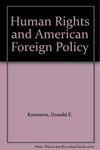
Human Rights and American Foreign Policy
Donald P. Kommers and Gilburt D. Loescher
A collection of articles examines the human rights thrust of President Carter's foreign policy, considering its formation, definition, difficulties, and implementation and evaluating its political and moral overtones
-

Privacy in Britain
Walter F. Pratt
Beginning with an analysis of a landmark article in an American law journal, this study describes the growth of claims to a right to privacy in Britain and contrasts the nature of the British and American interpretations of the precedents of this right.
-

Techniques in the Investigation and Prosecution of Organized Crime: Manuals of Law and Procedure, 3 v.
G. Robert Blakey and Ronald. Goldstock
-
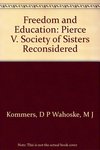
Freedom and Education: Pierce v. Society of Sisters Reconsidered
Donald P. Kommers and Michael J. Wahoske
Symposium to celebrate the 50th anniversary of the landmark case, Pierce v. Society of Sisters. Pierce v. Society of Sisters has long been celebrated as the Supreme Court case which vindicated the existence & free exercise of the right to private education.
-
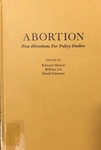
Abortion: New Directions for Policy Studies
Donald P. Kommers
Book Chapter
Donald P. Kommers, Abortion and the Constitution: The Cases of West Germany and the United States, in Abortion: New Directions for Policy Studies 83 (Edward Manier, William Liu, & David Solomon eds., 1977)
On January 22, 1973, the United States Supreme Court substantially curtailed the power of the American states to prohibit or limit the right of a woman to procure an abortion. On February 25, 1975, the West German Federal Constitutional Court ruled that the German parliament, by permitting abortions within the first three months of pregnancy, violated the constitutional rights of unborn children. These decisions provide us with an uncommon opportunity to compare the constitutional law of different nations on abortion. That the highest tribunals of two robust constitutional democracies and secular political cultures should decide the question of the unborn child's right to life under the constitutions of their respective countries differently should excite the wonder of us all, no matter where we may stand in the abortion controversy.
The “Books” section of the Notre Dame Law School Scholarship Repository is a large digital bibliography and archive of books, casebooks, edited volumes, and monographs authored or edited by Notre Dame Law School faculty. It represents decades of faculty scholarship across many areas of legal study–reflecting both scholarly and instructional publishing. Recurring themes include comparative and international law and interdisciplinary scholarship. Natural law and moral philosophy emphasize Notre Dame’s longstanding engagement with Catholic intellectual traditions and jurisprudence.
Printing is not supported at the primary Gallery Thumbnail page. Please first navigate to a specific Image before printing.